AXIS MAGNETICS

China Rare Earth Export Controls

Updated August 2026

China rare earth magnet export controls create sourcing risk for Dy/Tb-containing magnets.

China's 2025 rare earth export controls put new attention on dysprosium, terbium, and permanent magnet materials that contain controlled heavy rare earth elements. Axis Magnetics helps teams review the magnet-side sourcing questions: whether the current NdFeB specification depends on Dy/Tb, what comparison data a factory can provide, and whether HRE-Free NdFeB, dysprosium-free magnets, SmCo, bonded, ferrite, coating, or assembly-level changes can meet the required magnet performance or specs.

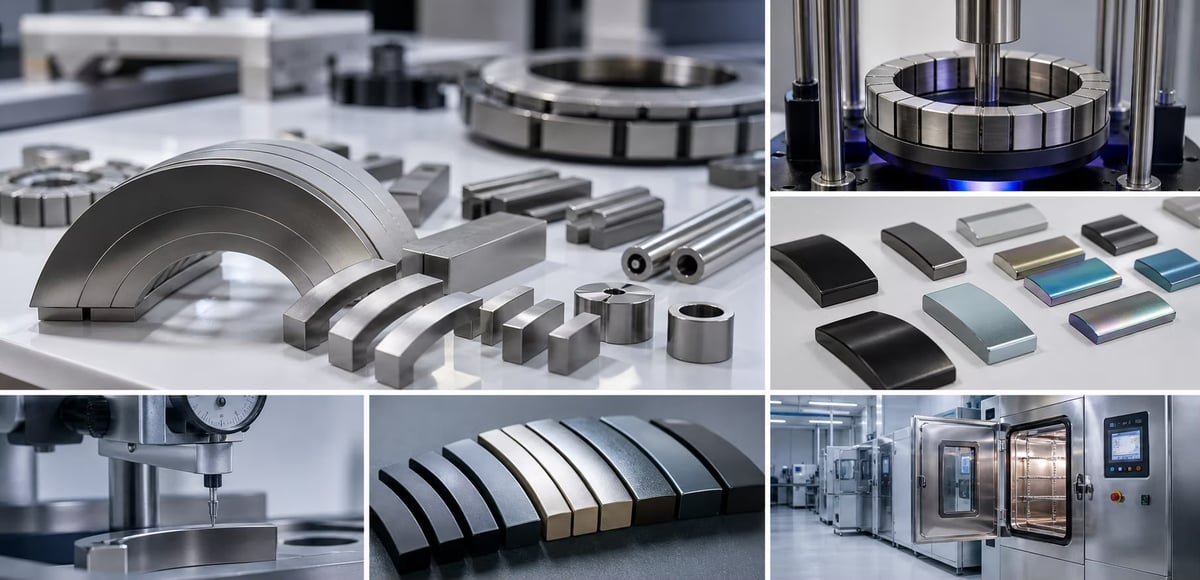
China rare earth magnet export controls review with NdFeB documentation and factory comparison data

Sourcing focus

Each review starts with the application, then works through material, coating, magnetization, validation, origin, and production requirements.

What changed for magnet buyers

The practical issue is not only whether a magnet is rare earth. Buyers need to know whether the material family, grade direction, heavy rare earth content, origin, destination, end use, or customer flow-downs create a license or documentation review before parts can move.

Why the 2025 controls matter

MOFCOM Announcement No. 18 of 2025 listed export controls for several medium and heavy rare earth related items, including terbium-containing NdFeB, dysprosium-containing NdFeB, and samarium-cobalt permanent magnet materials. Controlled permanent magnet materials include magnets or magnetic powders, and exporters must apply for a license for controlled items. SmCo therefore also requires a composition and licensing review when considered as an alternative.

Why this is a supply-chain issue, not only a legal issue

The IEA's 2026 rare earth analysis describes permanent magnets as the fastest-growing and most strategically important rare earth application by value, with high-performance NdFeB often using dysprosium and terbium as performance-enhancing additives. It also reported that China accounted for 94% of sintered permanent magnet production in 2024, which is why export-control changes can quickly become sourcing and production-continuity problems.

Dy/Tb-containing NdFeB needs early review

Dysprosium and terbium are often used when NdFeB applications need higher coercivity or temperature margin. If an existing drawing calls for a Dy/Tb-containing grade, the sourcing path should compare magnetic output, intrinsic coercivity, temperature behavior, geometry, coating, magnetization, inspection method, and validation requirements.

HRE-Free and dysprosium-free sourcing paths

A composition review should distinguish HRE-Free NdFeB from grades specified only as dysprosium-free or terbium-free. Confirm the elements excluded by each candidate, then compare the documented material against the required magnetic performance and qualification plan.

Factory comparison data before qualification

Depending on the application and industry, factories can often provide comparison data between HRE-containing and HRE-Free grades in advance. That can help the buyer decide whether to sample a lower-risk path before lead time, disclosure, or export-license pressure affects production.

Compliance stays with the customer

Axis Magnetics can help assemble magnet-side data and sourcing options, but legal, customs, classification, screening, licensing, and end-use decisions remain the customer's responsibility. The useful output is a clearer technical and sourcing package for the customer's own compliance review.
What Axis can review

China rare earth magnet export controls sourcing review

Dy/Tb-containing NdFeB exposure and alternate-path checks

HRE-Free, dysprosium-free, SmCo, bonded, ferrite, and assembly-level options

Factory comparison data, documentation, and qualification inputs

Useful inputs

Current drawing, grade direction, material family, or required specs

Known dysprosium, terbium, Dy/Tb, HRE, or HREE exposure

Origin, destination, end-use, customer flow-down, or documentation concern

Operating temperature, magnetic output, coating, magnetization, and validation needs

Prototype timing, production volume, and alternate qualification window

Buyer review map

Compare material, performance, and documentation needs before selecting a sourcing path.

Search or sourcing focus

Search or sourcing focus

China rare earth magnet export controls

Common risk

Dy/Tb-containing NdFeB magnets may require more documentation, supplier coordination, or export-license review

Useful review path

Identify material family, grade direction, Dy/Tb exposure, origin, destination, end use, and customer flow-downs.

Search or sourcing focus

NdFeB export license concern

Common risk

A drawing may call out a grade that depends on controlled heavy rare earth content

Useful review path

Compare HRE-Free NdFeB, dysprosium-free magnets, SmCo, bonded NdFeB, ferrite, coatings, or assembly redesigns against required specs.

Search or sourcing focus

Production continuity problem

Common risk

License timing, disclosure concerns, or supplier uncertainty can interrupt launch or replenishment

Useful review path

Request factory comparison data, sample options, validation plan, and alternate production routes before the shortage becomes urgent.

Search or sourcing focus

Customer compliance request

Common risk

Sourcing, engineering, quality, and compliance may be asking for different evidence

Useful review path

Build a concise magnet-side data package with material, origin, comparison data, inspection, and validation inputs.

Common sourcing questions

Direct answers for sourcing, engineering, and compliance teams reviewing this magnet path.

What China rare earth export controls matter for NdFeB magnet buyers?

The buyer should review whether the magnet specification, material family, grade, origin, destination, end use, or customer requirements involve controlled rare earth items or permanent magnet materials, especially when dysprosium or terbium is present.

Does HRE-Free NdFeB avoid every export-control issue?

No. HRE-Free can reduce one important material-content concern, but compliance still depends on origin, destination, end use, documentation, customer requirements, and legal classification.

What should be sent to start an alternate magnet review?

Useful inputs include the current drawing or grade, known Dy/Tb exposure, required magnet performance or specs, temperature range, coating, magnetization direction, inspection method, origin constraints, and timing for samples or production.