AXIS MAGNETICS

Export-Restriction-Aware Magnet Sourcing

Updated August 2026

Export compliant magnet sourcing starts with material risk.

Axis Magnetics helps teams review magnet sourcing paths when export restrictions, heavy rare earth exposure, Dy/Tb content, origin requirements, or customer flow-downs create risk. The work is practical: confirm the application target, compare HRE-Free and dysprosium-free options, and gather the documentation needed for the customer's own compliance review.

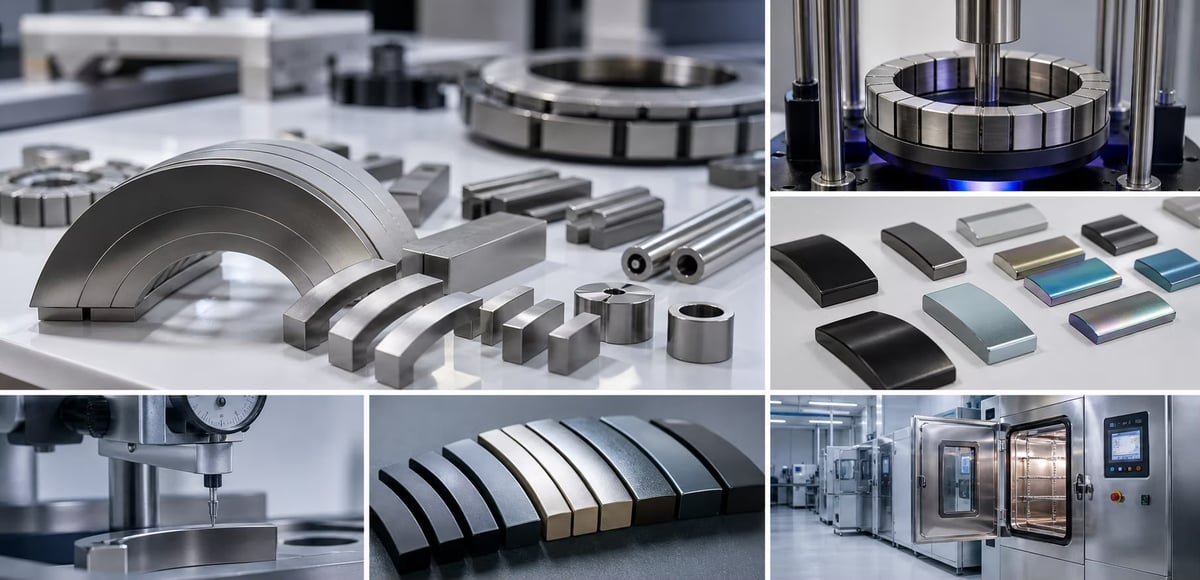
Magnet sourcing documentation and production validation review

Sourcing focus

Each review starts with the application, then works through material, coating, magnetization, validation, origin, and production requirements.

Export compliant is a sourcing review, not a generic grade

Export compliance depends on material content, country of origin, destination, end use, documentation, and customer requirements. Axis Magnetics can help organize the magnet-side inputs for that review while customers remain responsible for classification, screening, licensing, and legal obligations.

Heavy Rare Earth-Free and Dy/Tb-free options

HRE-Free specifications should define the heavy rare earth elements excluded and the documentation needed to confirm composition. Dysprosium-free or terbium-free alone does not confirm both elements are absent. Compare each candidate against magnetic output, temperature behavior, coercivity margin, coating, magnetization, and validation requirements.

Export restrictions can change the qualification path

If the current drawing depends on dysprosium or terbium, the review can compare HRE-Free NdFeB, SmCo, bonded NdFeB, ferrite, alternate coatings, or assembly-level changes where the magnetic circuit allows. Factories can often provide comparison data in advance so the program can qualify a lower-risk path before supply pressure rises.

Documentation and factory comparison data

A useful export-restriction review may include material family, grade direction, known Dy/Tb exposure, origin expectations, coating, magnetization, inspection method, and factory comparison data between HRE-containing and HRE-Free options. That gives sourcing, engineering, and compliance teams a cleaner basis for decision-making.

What Axis can prepare for your team

Axis Magnetics can help organize a magnet-side sourcing package that includes the current spec, alternate grade paths, factory comparison data, production route, origin expectations, coating and magnetization notes, inspection method, and validation plan. Your compliance team can then review that package against legal, customs, end-use, and customer requirements.

When speed matters

If a program is already feeling license delay or supply pressure, the fastest useful review starts with the current drawing or grade, known Dy/Tb concern, annual volume, sample timing, and minimum performance requirements. That keeps the search focused on qualified alternatives instead of broad catalog matching.
What Axis can review

Export-restriction and restricted-material sourcing review

HRE-Free, dysprosium-free, terbium-free, and Dy/Tb-free option comparison

Factory data coordination for HRE and HRE-Free alternatives

Application, origin, documentation, and qualification inputs

Useful inputs

Current magnet grade, material family, or performance target

Known Dy/Tb, HRE, HREE, or heavy rare earth content concern

Destination, origin, customer flow-down, or licensing concern

Validation requirements needed before an alternate is approved

Buyer review map

Compare material, performance, and documentation needs before selecting a sourcing path.

Search or sourcing focus

Search or sourcing focus

Buyer asks for export compliant magnets

Common risk

The phrase can hide several issues: content, origin, destination, end use, documentation, or customer flow-downs

Useful review path

Clarify the exact magnet-side concern, then compare HRE-Free, dysprosium-free, SmCo, bonded, ferrite, and assembly-level paths.

Search or sourcing focus

Existing spec contains dysprosium or terbium

Common risk

Controlled heavy rare earth content can create licensing, disclosure, timing, or supplier-availability friction

Useful review path

Ask factories for comparison data between HRE-containing and HRE-Free options before changing the drawing.

Search or sourcing focus

Supplier cannot confirm material content

Common risk

Unclear composition can slow customer review and make sourcing decisions harder

Useful review path

Request grade, material family, composition support, origin expectations, and validation documentation early.

Common sourcing questions

Direct answers for sourcing, engineering, and compliance teams reviewing this magnet path.

Are export compliant magnets a specific magnet grade?

No. Export compliant magnets are not a single grade or material family. Compliance depends on material content, origin, destination, end use, documentation, customer requirements, and the customer's legal and customs review.

Can HRE-Free or dysprosium-free magnets reduce export-license exposure?

They can reduce one important trigger when the current magnet depends on dysprosium, terbium, or other restricted heavy rare earth content. The alternate still has to meet the required magnet performance or specs before it can be qualified.

What information helps start an export-compliance-aware sourcing review?

Helpful inputs include the current grade or drawing, known Dy/Tb exposure, country-of-origin concerns, destination, customer flow-downs, operating temperature, coating, magnetization, and validation requirements.